This page is being restored. Return to the homepage.
Frequently Asked Questions
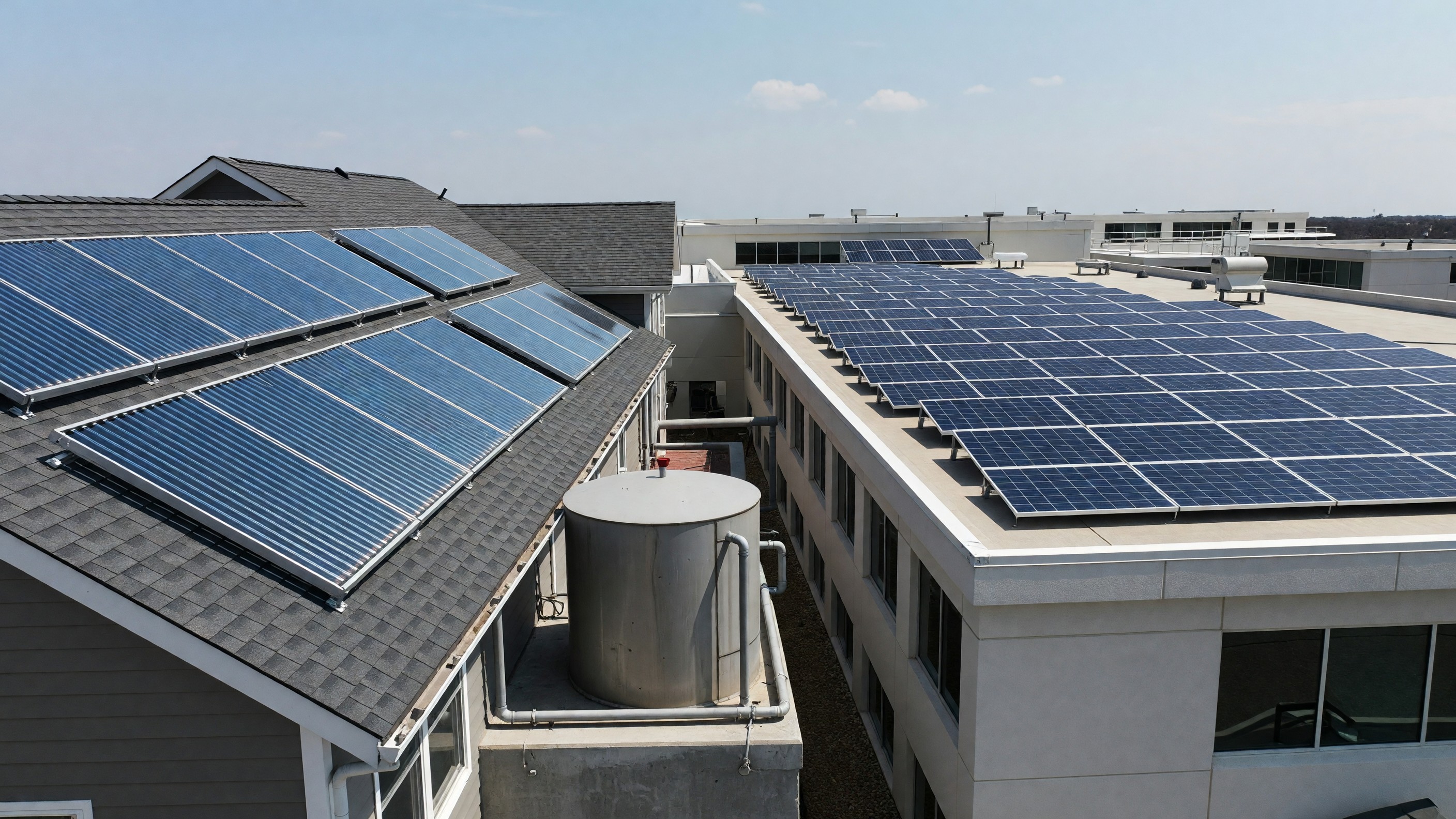
How does solar water heating work for residential homes? Residential solar water heating systems use roof-mounted collectors to absorb solar radiation and transfer heat to water stored in an insulated tank. In direct (open-loop) systems, potable water circulates through the collectors. In indirect (closed-loop) systems, antifreeze fluid circulates through the collectors and transfers heat to domestic water via a heat exchanger, providing freeze protection.
How much energy can a solar water heater save compared to conventional systems? The DOE estimates that solar water heaters reduce water heating energy consumption by 50–80 percent annually. Water heating typically accounts for 14–18 percent of a home’s total energy use per EIA data, so a solar water heater reduces total household energy bills by 7–14 percent — a significant share of total consumption from a single system.
What federal incentive supports solar water heater purchases? SRCC OG-300 certified solar water heaters installed on a primary or secondary residence qualify for the 30 percent Section 25D Residential Clean Energy Credit through 2032. Systems used exclusively for pool or hot tub heating do not qualify. The credit applies to equipment, labor, and permits.
What is the lifespan of a properly maintained solar water heater? Well-maintained solar water heating systems last 20–30 years with periodic maintenance, significantly outlasting the 10–13 year average lifespan of conventional electric resistance water heaters. Flat-plate collectors can last 25+ years; evacuated tube collectors typically last 20 years. Storage tanks are the component most likely to require replacement at 15–20 years.
Further Reading from Authoritative Sources
- DOE Energy Saver Solar Water Heating Guide — energy.gov is the authoritative federal resource on solar water heating for residential homeowners — the primary reference for system fundamentals.
- NREL Solar Thermal Technology Research — NREL is the primary federal research institution for solar thermal performance data and technology evaluation.