For decades, “solar water heater” meant rooftop solar thermal collectors — glycol or water flowing through copper tubes under glass. Then heat pump water heaters quietly took over the high-efficiency residential market, propelled by their ability to use cheap grid electricity (or, increasingly, your own PV electricity) to extract heat from ambient air. Both technologies have a place in 2026, but the case for each has narrowed considerably and depends heavily on climate, home layout, and what other energy choices you’ve already made.
How Each Technology Works
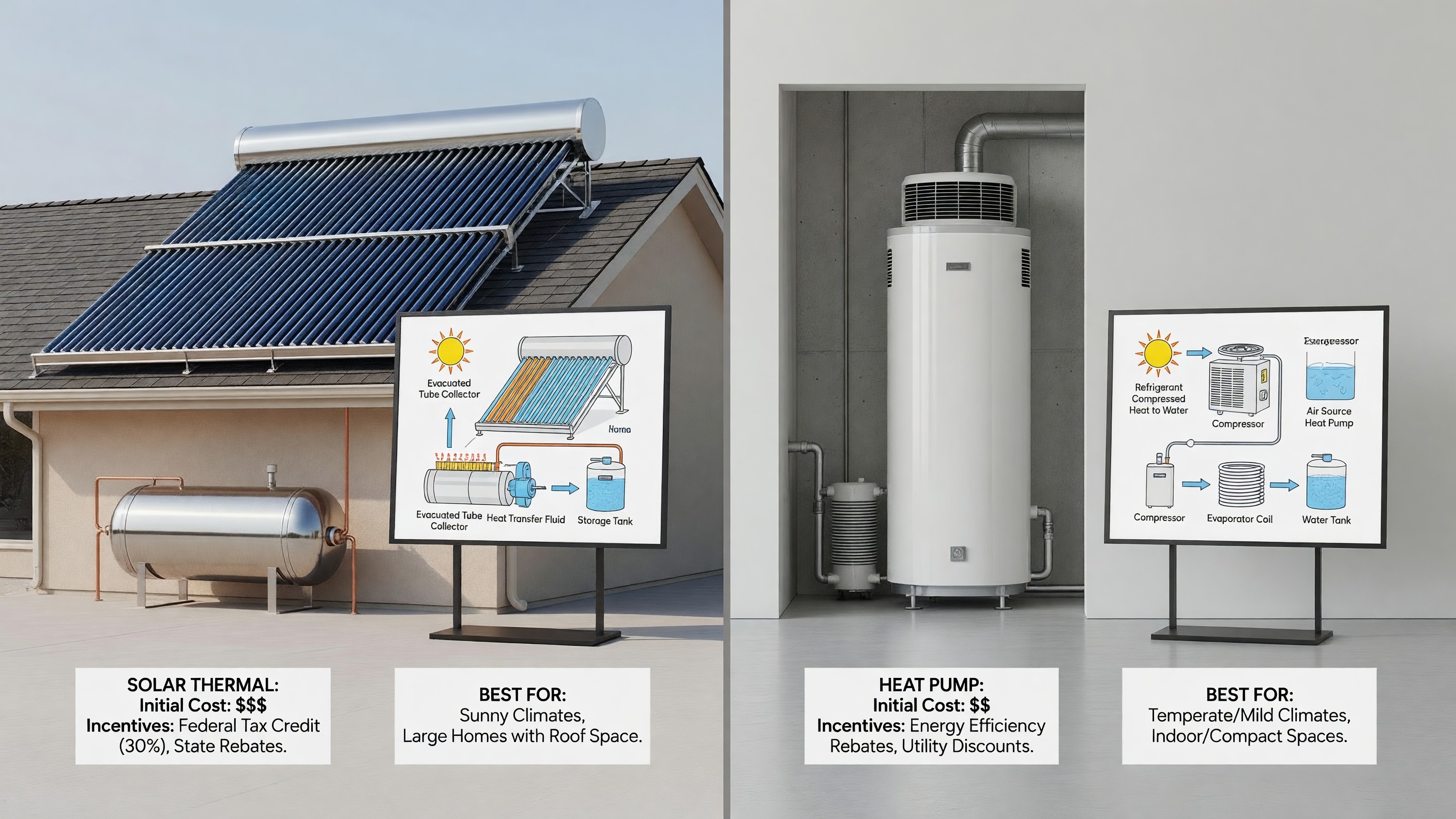
Solar thermal water heaters use roof-mounted collectors — either flat-plate (a glazed box with a black absorber and copper tubing) or evacuated tube (rows of glass tubes around heat-pipe cores) — to absorb solar radiation directly as heat. The heat is transferred via a fluid loop (usually propylene glycol in freeze-prone climates) to a heat exchanger in a storage tank in the basement or utility room. An electric or gas backup element handles cloudy days and high-demand periods.
The two common configurations:
- Active indirect systems (most common in the U.S.): pumped circulation, glycol antifreeze loop, separated from the potable water by a heat exchanger.
- Passive thermosiphon systems: no pump, tank above collector, common in warm climates like Hawaii and the Caribbean.
Heat pump water heaters (HPWHs) look like a standard 50- or 80-gallon electric tank with a compressor unit on top. The compressor and evaporator extract heat from the surrounding air and concentrate it into the water, using the same refrigerant cycle as a heat pump used for space heating. They achieve a Coefficient of Performance (COP) of 2.5 to 4.0 — meaning they deliver 2.5 to 4.0 units of heat for every unit of electricity consumed. Most modern HPWHs include a backup resistance element that engages during high demand or very cold conditions.
Upfront Cost
In 2026, installed cost ranges from the U.S. Department of Energy’s water heater guidance and current contractor pricing surveys:
- Solar thermal water heater (full system, 2 collectors, 80-gal tank, install): $6,000 to $11,000 installed, occasionally higher in retrofits with difficult roof or plumbing runs.
- Heat pump water heater (50–80 gallon): $1,800 to $3,500 for the unit, plus $500 to $1,500 for installation. Total: $2,300 to $5,000 in most cases.
- Standard electric resistance water heater (for reference): $700 to $1,500 installed.
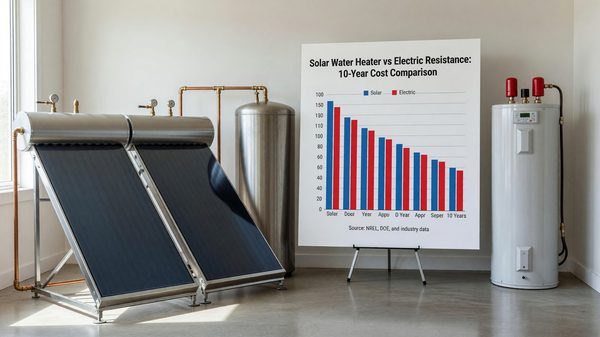
The cost gap is the central fact. A solar thermal install is roughly two to three times the cost of a comparable HPWH install, before incentives.
Incentives in 2026
Both technologies qualify for the 30% federal Residential Clean Energy Credit in 2026 — this is a meaningful update from pre-2023 rules, when HPWHs were covered under a smaller, capped Section 25C credit. Under current law:
- Solar thermal water heaters qualify for the 30% uncapped credit under Section 25D (provided the system is SRCC-certified and at least 50% of energy comes from the sun).
- Heat pump water heaters qualify for the Energy Efficient Home Improvement Credit (Section 25C) at 30% of cost, capped at $2,000 per year for heat pumps and HPWHs combined. They do not qualify under Section 25D.
The distinction matters for high-cost projects. A $9,000 solar thermal system generates a $2,700 federal credit with no cap. A $4,500 HPWH generates a $1,350 federal credit, well within the $2,000 cap.
State and utility rebates layer on top. The DSIRE database is the authoritative source — many utilities offer $300–$1,000 HPWH rebates because they shift water heating off of peak gas/electric demand. Solar thermal rebates exist but are less common than they were a decade ago. Our federal solar tax credit guide covers how Section 25D works in detail.
Operating Cost
This is where the comparison gets interesting because it depends on what you’re displacing.
A typical four-person household uses 3,500 to 5,000 kWh per year for water heating with a standard electric resistance heater (EIA Residential Energy Consumption Survey).
- Solar thermal typically meets 60–80% of annual hot water load in a good site, with the backup element handling the rest. Net annual electricity use: 700–2,000 kWh.
- Heat pump water heater at COP 3.0: 1,200–1,700 kWh per year.
- Standard electric resistance: 3,500–5,000 kWh per year.
At a national average residential electricity rate of $0.16/kWh (EIA, 2026), the annual cost difference between a solar thermal system and an HPWH is often within $100–$200 — small enough that the upfront cost premium dominates the lifetime math.
If you’re displacing natural gas water heating, the comparison shifts: HPWHs replace cheap gas with grid electricity, which can increase operating cost in markets with cheap gas and expensive electricity. Solar thermal also competes with gas, but its low operating cost (effectively only the pump) tips the balance back toward solar.
Climate Considerations
Climate strongly favors one technology over the other:
Solar thermal wins in:
- Sunny, warm climates with long heating seasons (Hawaii, southern Florida, California, Arizona, parts of the Southwest).
- Homes with good unshaded south-facing roof area not needed for PV.
- Households with above-average hot water demand (6+ people, large soaking tubs, frequent guests).
Heat pump water heaters win in:
- Mild to moderate climates where ambient air is consistently above ~50°F in the space where the tank lives.
- Warm garages, basements, and utility rooms — HPWHs run best in spaces with adequate air volume (typically 1,000+ cubic feet) and ambient temperatures of 50–90°F.
- Homes that already have or plan to add rooftop PV (more on this below).
HPWHs struggle in:
- Unheated garages in northern climates — sub-freezing air kills COP and may trigger backup resistance mode.
- Small, enclosed closets without ventilation.
The Critical Interaction with Rooftop PV
This is the argument that has reshaped the comparison in the last five years.
If you have (or plan to have) rooftop solar PV, the HPWH effectively becomes a solar-powered water heater — but uses your existing PV array instead of dedicated rooftop thermal collectors. The HPWH consumes roughly 1,500 kWh per year. A small expansion of your PV array (1 to 1.5 additional panels) covers that load entirely, and the marginal cost of adding 1.5 panels is well under the cost of a separate solar thermal system.
For homeowners building or expanding a PV array, the conventional wisdom in 2026 is: upsize the PV, install a heat pump water heater, and skip dedicated solar thermal. This consolidates the rooftop into a single technology, simplifies maintenance, and uses the more efficient end-to-end energy chain (PV → electricity → heat pump COP 3.0 → hot water beats solar thermal → 60–80% direct-use for most applications).
This logic does not apply if your roof can’t support an expanded PV array, or if you don’t have PV at all and don’t plan to add it.
Installation Complexity
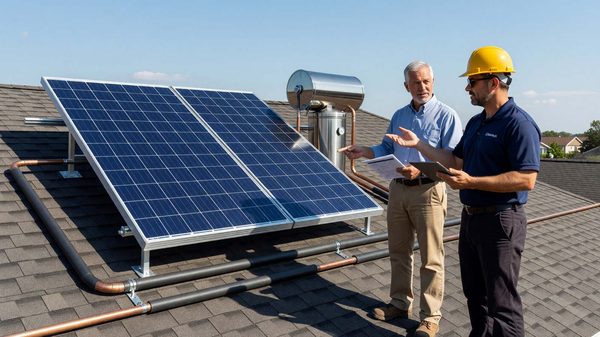
- Solar thermal: roof penetrations, glycol loop, expansion tank, freeze protection, heat exchanger, careful pump-station plumbing, plus the storage tank and backup. Requires a contractor experienced with solar thermal — a shrinking pool in many U.S. markets. Roof access, slope, and orientation matter. Annual maintenance check on glycol pH and pump operation is recommended.
- HPWH: replaces an existing tank in roughly half a day. Standard 240V electrical (most units), condensate drain (it produces a small amount of dehumidified water), and adequate air volume in the install space. Most existing electric water heater locations work directly. Annual maintenance: clean the air filter, occasionally flush the tank.
The HPWH installation labor pool is large and growing; the solar thermal labor pool is shrinking. This is itself a long-term reliability consideration.
The Case Where Solar Thermal Wins
Solar thermal is the better choice when:
- You’re in a high-insolation, warm climate with year-round sun.
- Your hot water demand is high — large family, commercial-grade laundry, hot tub make-up water.
- You either don’t have or can’t add rooftop PV, but have available roof area.
- Natural gas is your existing fuel and electricity prices are high.
- Your installer has a strong solar thermal track record (this matters more here than for PV).
The Case Where Heat Pump Water Heaters Win
HPWHs are the better choice when:
- You have or plan to add rooftop PV.
- You’re in a moderate climate or have a conditioned mechanical space.
- Your hot water demand is typical (1–5 people).
- Upfront cost matters more than maximum lifetime energy production.
- You want simple installation and a deep contractor labor pool.
For most U.S. homeowners in 2026, the second list applies, which is why HPWH installations are growing roughly 8× faster than solar thermal installations nationally. For more on sizing the PV side of the equation, see our installation walkthrough.
Frequently Asked Questions
Does a heat pump water heater really qualify for the 30% tax credit? Yes, but under Section 25C, capped at $2,000 per year for heat pumps and HPWHs combined. Solar thermal qualifies under the uncapped Section 25D credit.
Will a heat pump water heater cool my basement? Yes — it extracts heat from the surrounding air, which produces 1,000–2,500 BTU/hr of incidental cooling and some dehumidification when running. That’s a feature in summer and a small wintertime drawback if the install space borrows heat from conditioned space.
How long do solar thermal collectors last? Quality flat-plate collectors are warrantied for 10 years and routinely last 25–30. The pump, controller, and storage tank typically need replacement at 15–20 years.
Can I run a HPWH on a 120V circuit? Some 2024-generation models do support 120V operation, with reduced output. Most still require 240V. If you’re retrofitting an existing 240V electric water heater, no electrical change is needed.
Are solar thermal water heaters still installed in cold climates? Yes, with proper glycol antifreeze loops and freeze-tolerant collectors. Effectiveness drops in winter but the systems are designed to operate year-round in most U.S. climates with electric or gas backup.